Saturday, February 5, 2011

Health care fraud: Not a faceless crime any longer

Medicaid fraud in child welfare is no longer faceless because the efforts to stop it has a name.

Beverly Tran.

Health care fraud: Not a faceless crime any longer


Health care fraud once was a faceless crime. Now it has a mug shot, even a smile.
Medicare and Medicaid scams cost taxpayers more than $60 billion a year, but bank holdups are more likely to get greater attention.
The government wants the public's help in trying to catch more than 170 fugitives wanted for fraud, so it's developed a new health care most-wanted list, with its own website — http://www.oig.hhs.gov . Most are dour; some sport smiles.
One name on the list is Leonard Nwafor, convicted in Los Angeles of billing Medicare more than $1 million for motorized wheelchairs that people didn't need. One person who got a wheelchair was a blind man who later testified he couldn't see to operate it.
Facing time in federal prison, Nwafor disappeared before his sentencing.
"We're looking for new ways to press the issue of catching fugitives," said Gerald Roy, deputy inspector general for investigations at the Health and Human Services Department. "If someone walks into a bank and steals $3,000 or $4,000, it would be all over the newspaper. These people manage to do it from a less high profile position, but they still have a tremendous impact."
Even though motorized wheelchairs can cost up to $7,000 apiece, Nawfor's scam was on the low end when compared with others who made the most-wanted list.
isters Clara and Caridad Guilarte allegedly submitted $9 million to Medicare in false and fraudulent claims for pricey infusion drugs that were never provided to patients. They are accused of offering cash and other rewards for beneficiaries to visit their clinic in Dearborn, Mich., and sign forms that said they received services that they never got.
An alleged accomplice was arrested in the Dominican Republic recently, but the sisters remain at large.
Scammers "often utilize their ties to a particular community," said Roy. "They take advantageof ethnic communities based on language barriers or lack of knowledge about how the Medicare system works. These folks are exploiting low-income communities."
Fugitive Susan Bendigo is accused of billing California's Medicaid program for $17 million in nursing care, much of which was performed by staffers who weren't licensed. A registered nurse, Bendigo was the nursing director for a company that provided personnel for home health agencies. Allegedly, she was fully aware that she was required to send licensed nurses to care for patients.
Topping the list are Miami brothers Carlos, Luis and Jose Benitez. Owners of a string of medical clinics, they allegedly scammed Medicare out of $119 million by billing for costly HIV drugs that patients never received or did not need. Authorities say they bought hotels, helicopters and boats before fleeing to Cuba.
The FBI has the marquee most-wanted list, but the Environmental Protection Agency and other federal agencies also maintain their own.
Roy said he hopes this newest list will raise awareness about the importance of combatting health care fraud. Medicare and Medicaid, which provide care for about 100 million people in the U.S., are in serious financial trouble and can't afford to be hemorrhaging tens of billions a year because of fraud.
Most people go to elaborate lengths to avoid having their scams detected. But there often is a telltale sign.
To document his transactions, wheelchair purveyor Nwafor assembled elaborate paper files, complete with bogus prescriptions and photos of beneficiaries in their wheelchairs. But investigators had a hunch they were on to something when they discovered that most of his customers lived nearly 200 miles away from his Los Angeles-area store.

Thursday, February 3, 2011

Single Payer Health Insurance Pilot Program A Success

Single Payer Health Insurance Pilot Program A Success


This is the look of the future of health insurance.  This is it.  This is a single payer program.

Congressman John Conyers, Jr. has been promoting a Single Payer Program for health care for everyone to be eligible with his United States National Health Care Act, HR 676.  This program deals with a single payer source, not specifically a "single individual" paying into the program with tax dollars.

The single payer is a financial term referring to a single funding source.  When there is a single funding source, in the instance of the CHIRPA Medicaid programs for children and families, the ability exists to provide transparency, accountability and oversight through its counter program, and that is the single audit.

In the United States, the Single Audit, also known as the OMB A-133 audit, is a rigorous, organization-wide auditor examination of an entity that expends $500,000 or more of Federal assistance (commonly known as Federal funds, Federal grants, or Federal awards) received for its operations.[1][2][3] Usually performed annually,[4] the Single Audit’s objective is to provide assurance to the US federal government as to the management and use of such funds by recipients such as states, cities, universities, and non-profit organizations. The audit is typically performed by an independent certified public accountant (CPA) and encompasses both financial and compliance components. The Single Audits must be submitted to the Federal Audit Clearinghouse along with a data collection form, Form SF-SAC.

The Single Audit ensures there is efficiency in the delivery of services, there is continuous quality improvement of programs and services, and enforces mandatory compliance with the terms of funding source, reducing fraud, waste and abuse.

With the Electronic Health Records  incentive programs, it is only with a click of the button that these single payer programs can be reviewed through auditing programs.

Even more so, there are other codified mechanisms to ensure accountability of single payer programs such as the Sarbanes-Oxley Act.

When there are such oversight mechanisms in place, there is always an improvement in program goals.  The goals of any program is to provide care for the health of society.  Through the investment in the best interests of the child, the national society profits when the program produces a future taxpaying citizen.  The child becomes a health adult.  A healthy adult becomes part of a healthy nation.  A healthy nation lessens the drain on its economical resources.

The Medicare model of the single payer will eventually be adopted.  When it does, there will already be a plan for implementation as its pilot program is dealing with children and families.

Two Year Anniversary of Children’s Health Insurance Law Sees Millions of Newly Insured Children, Families

Two years after President Obama signed the Children’s Health Insurance Program Reauthorization Act, HHS Secretary Kathleen Sebelius today announced that more than two million more children were served by Medicaid or the Children’s Health Insurance Program (CHIP) at some point over the past year.
Together, the two programs serve more than 42 million children who would otherwise not have access to regular medical care.
“The increase in the number of children served by these two vital programs is especially significant in the face of the recent economic downturn states are experiencing,” said Secretary Sebelius. “Even in times of hardship, states have demonstrated their commitment to the health of children by continuing efforts to identify and enroll them in coverage.”

To continue to advance coverage for children, Secretary Sebelius today also announced $40 million in new grants to states, community-based organizations, school systems and others to support their outreach and enrollment activities.  The grants will help states further modernize and streamline their administrative systems, as well as create and implement school-based outreach strategies and approaches for identifying children who have historically been hard to reach.
Today’s grant announcement builds on $206 million in enrollment bonuses earned by 15 states last year that increased enrollment above specific target levels.  The bonus funds help states cover the cost of enrolling additional children in Medicaid.
“As we mark the second anniversary of one of President Obama’s first actions as President, we can be confident that CHIPRA has proven to be a tremendous success,” said Sebelius. “Now we must build on our accomplishments. Today, I am again calling on leaders across the country – from federal, state and local officials to private sector leaders – to join our effort to insure more children. We all have a stake in America’s children and together, we will ensure millions more children get the care they need.”
States were able to increase enrollment in the two programs in part because of boosts in federal support provided by the American Recovery and Reinvestment Act (ARRA).  ARRA temporarily increased federal matching funds for state Medicaid programs during the recession.
While Medicaid and CHIP have helped bring the rate of uninsured children to the lowest level in more than two decades, an estimated five million uninsured children are thought to be eligible for one of these programs, yet not covered.
The Secretary’s Challenge: Connecting Kids to Coverage, launched last year, will continue support efforts to reach more children by providing leaders with critical information and support as they work to insure more children in their communities and by closely monitoring progress. 
“States’ continued progress toward enrolling all eligible children in coverage is a significant step in cushioning the recession’s impact on access to health insurance,” said Cindy Mann, director, Center for Medicaid, State and Survey and Certification Operations, within the Centers for Medicare & Medicaid Services (CMS). “As families lose employment or have their hours cut back they may lose the health coverage benefit that came with that job.  If not for these two programs, millions more children would go without critical health care services.”
In its second annual report on CHIP and Medicaid enrollment, CMS notes that:
  • More than 2 million children gained Medicaid or CHIP coverage during federal fiscal year 2010 (October 1, 2009 – September 30, 2010). In total, Medicaid and CHIP served more than 42 million children last year. This steady increase in enrollment is evidence of the important role that Medicaid and CHIP play for children, especially during economic downturns.  The uninsured rate for children continues to decline at a time with the rate for adults is climbing.  The increase in children’s enrollment demonstrates that Medicaid and CHIP are serving the purpose for which they were created – providing high quality health coverage for lower-income families.
  • Thirteen states implemented eligibility expansions in 2010 and many others simplified their enrollment and renewal procedures.  Forty-six states and the District of Columbia now cover children with incomes up to 200 percent of the federal poverty level (FPL) in Medicaid and CHIP; with 24 of those states and the District of Columbia covering children with incomes up to 250 percent of the FPL.  Twenty-one states now offer coverage to lawfully residing immigrant children and/or pregnant women, enabling states to receive federal funding for this coverage.
  •  CHIPRA Performance Bonuses have encouraged states to adopt and augment simplification measures in Medicaid and CHIP. Fifteen states qualified for a total of $206 million in performance bonuses for FY 2010; this is a significant increase over 2009 where 10 states received bonuses totaling $75 million. These bonuses provide additional federal financial support each year to states that successfully boost enrollment above target levels among previously eligible but uninsured children in Medicaid.  To qualify, a state not only has to enroll more children, but must also have implemented program features that are designed to promote enrollment of eligible children. 
  • States are increasing their use of technology to facilitate children’s enrollment and retention.  Nearly two-thirds of states (32) have an on-line application that can be submitted electronically; 29 states allow electronic signatures on those applications.  Six states have received approval to enroll children through the “Express Lane Eligibility” option created by CHIPRA.  Express lane eligibility allows states to use data gathered for other programs such as housing assistance or food stamps to determine Medicaid or CHIP eligibility. And 33 states are utilizing the CHIPRA data matching process provided by the Social Security Administration to confirm U.S. citizenship for children.
  • Outreach and enrollment grants have advanced coverage and led to public-private partnerships throughout the country to enroll more children. Sixty-eight grantees across 41 States and the District of Columbia are working diligently to facilitate children’s enrollment in health coverage 


Wednesday, February 2, 2011

Stop Child Medicaid Fraud

Stop Medicare Fraud

Rare but fair? Rep. John Conyers writes bill for Southgate mother facing deportation as debate over immigration reform continues

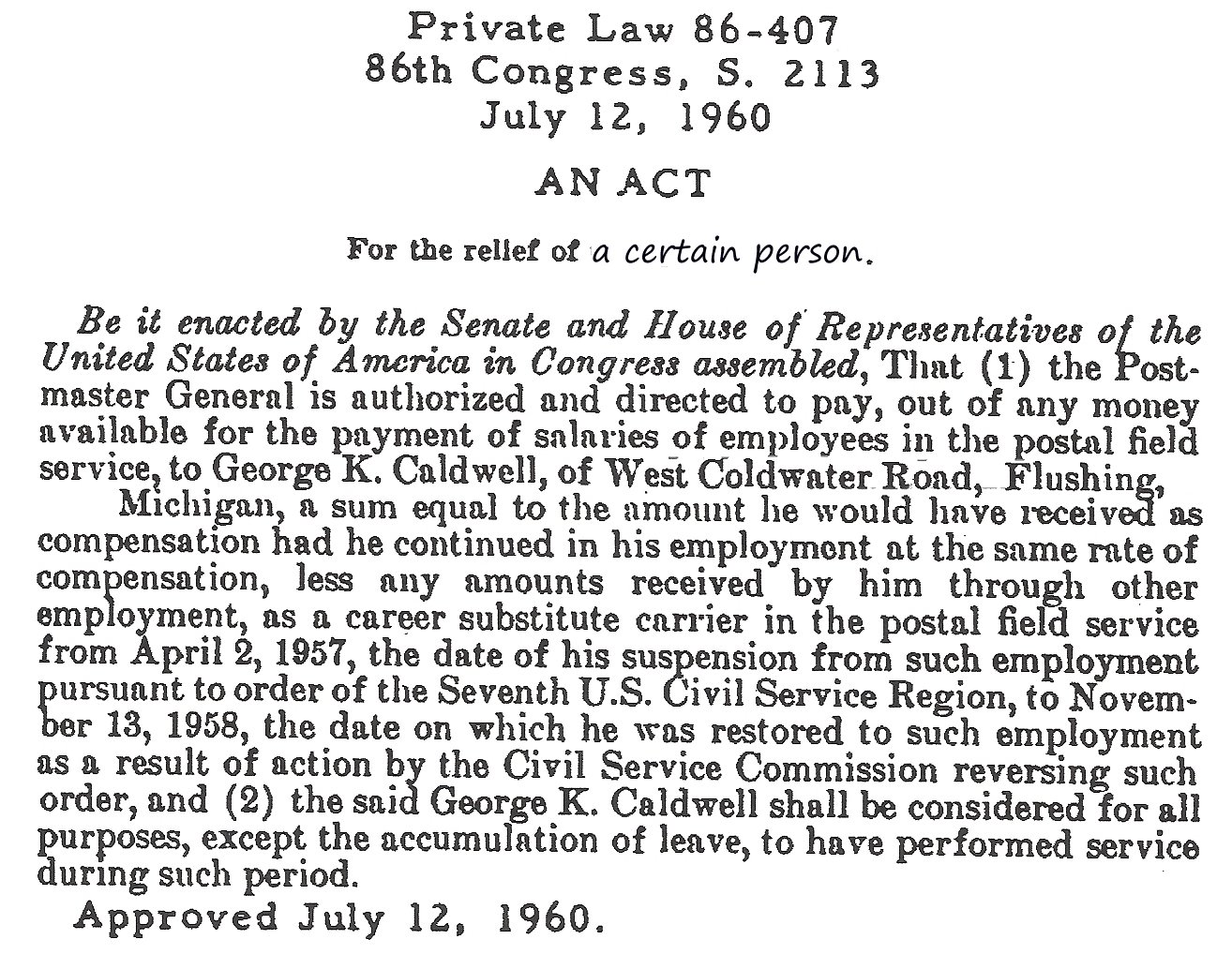
It is called a private bill.


Rare but fair? Rep. John Conyers writes bill for Southgate mother facing deportation as debate over immigration reform continues


As the national debate over immigration reform continues, U.S. Rep. John Conyers this month introduced a rare piece of legislation intended to save a single individual -- a Southgate mother caring for a child with cerebral palsy -- from deportation.
celina-hernandez-fox-2.JPG

House Bill 6499, "For the relief of Celina Hernandez," did not see a vote and was referred to a subcommittee, but it caught the attention of immigration officials, who last week granted Hernandez a one-year extension to stay in the United States.

Hernandez illegally entered the U.S. from Mexico more than 20 years ago along with her husband and an infant son, seeking quality health care after she lost a child in a premature delivery.  While working and paying taxes here, she gave birth to twin boys, both citizens, one of which has cerebral palsy and requires special care.  Officials deported her husband last year, and she faced a similar fate until Conyers intervened.

"I don't know what I'll do without my mom in the United States," Hector Hernandez, her healthy 21-year-old son who may also face deportation, told Fox 2 earlier this month.  "She really always gives me good advice, my dad also. I really miss my dad. I wish he was here."

Supporters say Conyer's private bill highlights the need for comprehensive immigration reform, arguing the need for legislation that recognizes the unique needs of children born to immigrants in the U.S.  In Hernandez' case and others like it, they say, a sick child should not be separated from his parents.

But as The Detroit News points out, critics believe Conyer's private bill -- his first since 1987 -- is unfair.
Dec. 27, DetNews.com: William Gheen, president of Americans for Legal Immigration, said bills written for individuals are "political propaganda" designed to influence the debate about immigration.

"It's anti-American. In America, the rule of law says we are all treated equally," said Gheen, whose Raleigh, N.C.-based group is fighting amnesty for illegal immigrants.

"For Congress to selectively make a case for someone gives the appearance that some people have special friends in Congress and can have laws changed for them specifically."
Conyers, however, has said little about the legislation, telling the News such private bills have been used throughout the nation's history "when an exception to existing law is absolutely necessary to avoid grave injustice or suffering."

The U.S. deported a record number of illegal immigrants -- 392,862 -- during the 2010 fiscal year, according to figures released in October by U.S. Immigration and Customs Enforcement. CBS News reported the ongoing deportation effort is part of President Obama's goal "to make our national laws actually work" and to entice Republicans to support comprehensive immigration reform.

The lame-duck Senate earlier this month defeated the DREAM ACT, a specifically-tailored bill which would have created a path toward citizenship for undocumented immigrants who entered the U.S. before they were 16, but Obama said he will renew his push for comprehensive immigration reform in 2011.

The White House released a statement last week following Obama's meeting with Congressional Hispanic Caucus members, explaining that the president "further reiterated his commitment to comprehensive immigration reform, pointing out that we can no longer perpetuate a broken immigration system that is not working for our country or our economy."

Questions and answers on unemployment

Questions and answers on unemployment

Questions and Answers about Unemployment and the US Economy
On the first Friday of every month the Bureau of Labor Statistics (BLS) releases information on the US labor force that covers the preceding month.  The number that often gets the most attention is the unemployment rate.  In organizing around jobs and unemployment, it is important to understand what the unemployment rate measures, what it omits, and what other information is contained in the BLS release.
Q: How bad is the employment situation in the U.S?  What do the different numbers mean?
A: The answer to the first question is: very bad – by far the worst since the Great Depression of the 1930s.  This is true even though the Great Recession was declared over in June 2009.  Here are the key numbers that demonstrate just how bad things are for working people.  Let’s begin with the unemployment rate as reported by the BLS.  This rate is the number of people unemployed and looking for work in the four weeks prior to the report divided by the people working plus those looking for work (in the prior 4 weeks).  It is important to note two things about this rate.  First, the only people counted as unemployed are those who report seeking a job in the prior four weeks.  If someone has been out of work but has given up looking or did not look in the previous 4 weeks, they are not counted among the unemployed.  Thus, if people drop out of the actively looking for work category, the unemployment rate may decline, even though as many or more people are unemployed.  This is part of what happened between November 2010 and December 2010 when the unemployment rate dropped from 9.8% to 9.4%: about half of the decline was the result of individuals no longer looking for work.  In December 2010 there were officially 14.5 million unemployed people.
That number is large but is at best half the story of unemployment.  In addition to the officially unemployed, the BLS also reports a number for people who report that that they want jobs but did not look in the 4 weeks covered by the report.  In December 2010 there were 6.5 million of these individuals, another 4.2% of the labor force.  Finally, the BLS also reports the number of people who are working part time but want to work full time.  There were 8.9 million such people in December 2010, accounting for another 5.7% of the labor force.  Adding these three categories together, there were 29.9 million un- or under- employed people in December 2010.
Q: What has been the trend in unemployment during the Great Recession?
The Great Recession officially began in Dec 2007 and ended in June 2009.  During those 18 months, the number of employed people in the US dropped by about 5.5 million.  If the unemployment rate had remained unchanged from the Dec 2007 level, the number of employed would have grown by about 2 million.  Thus by June 2009 we were down about 7 million jobs, with a total official unemployed population of 14.2 million.  In the following six months, the number of employed fell by another 2 million (December 2009) and 18 months after the official end of the Great Recession we have not yet returned to the number of jobs the existed in June 2009.
There is another other catastrophic development in unemployment during the Great Recession.  As of December 2010, over 44% of the unemployed were classified as long term unemployed, out of work for 27 weeks or more.  This measure has been at all time record levels.  Even in the 1983 recession, when unemployment last reached 10%, only about 1 in 4 of the unemployed was out of work for that long.
Q: Why didn’t the stimulus work to create jobs?
A: It did, over 3 million of them. However, the stimulus bill (the American Reinvestment and Recovery Act, ARRA) had several weaknesses.  First, it was too small, representing less than 6% of US GDP.  Second, a larger portion of ARRA was poorly designed to create jobs, relying on tax cuts rather than direct spending for job creation.  Tax cuts have only a weak impact on demand for labor, goods and services, particularly when compared to direct government spending, either for jobs, e.g. infrastructure, or to boost consumer demand, e.g. food stamps or unemployment insurance.  As economists describe it, tax cuts have a multiplier of only 0.5 while food stamps have a multiplier of over 1.5.
A: Who are the unemployed?
Q: The hardest hit sector of the labor force has been construction, accounting for about 25% of the jobs lost.  This is not surprising since the housing boom of 2002 – 2006 can be thought of as a WPA for the construction sector.  By 2005, housing and its associated industries (e.g. furnishings, finance, building materials, etc.) represented almost 25% of US GDP.  Manufacturing, especially durable goods, had also lost jobs.  By demographic characteristics, both the young labor force entrants and the old, people facing but often delaying retirement, have suffered – and continue to suffer – the most form the failure in job growth.
Q: Can the private sector labor market restore employment?
A: Left by itself it would take an extremely long time, and in fact might never reach the pre-Great Recession employment levels.  During 2010 private sector job creation averaged 94,000 jobs/month.  This sounds ok until you realize that the labor force grows by about 110,000 – 120,000/month – so we have actually lost ground.  In the past 50 years the best that private sector job growth achieved was 500,000 new jobs/month for a short time during the Ford/Carter presidencies.  However, even this may be overoptimistic.  Over the past 25 years, the US economy has demonstrated a declining ability to bounce back from recessions considerably milder than the Great Recession.  From 1948–1980 the average number of post recession months required to return to pre-recession employment levels was 9; during this 32 year period, the maximum number of months to get back to pre-cession employment levels was 12.  In contrast, after the 1990 downturn it took 23 months before employment returned to pre-recession level, and it took 39 months after the 2001 recession.  Today we are already 18 months beyond the end of the Great Recession and, as noted above, have not even begun the task of growing fast enough to return to pre-recession employment numbers.
Of course, even prior to the onset of the Great Recession in December 2007, there were already 7.3 million unemployed.  Consider the best job creation rate in the past 50 years (500,000/month – which means a net of less than 400,000 after subtracting new labor forced entrants).  Even at that rate, it would take more than 3 years to absorb the 14.2 million officially unemployed and another 3 years to provide jobs for the part time/want full time work plus discouraged workers.  The private sector has never sustained that rate or anything near it for the period of time necessary to return us to full employment.
Q: What can be done about the lack of jobs?
A: With the failure of the private sector labor market, the alternative – and most efficient approach – is for the federal government, in cooperation with states and municipalities, to undertake a job creation program.  The program must meet several criteria: (i) it must be large enough in scope to provide jobs for the millions without them; (ii) it must be more than make work, targeted to jobs that meet social needs and jobs that provide career paths; (iii) the wages earned should be sufficient to support the worker and his/her dependents; (iv) jobs should go first to people suffering from long term unemployment; and (v) the jobs that are created should not require a long time for training and/or preparation – we need to put people to work quickly, much as the WPA did in the 1930s.
Q: What about the deficit problem?  Can we afford a jobs program?
A: Yes – a job creation program can pay for itself and also help us move our political economy away from over dependence on banks and other financial businesses.  With regards to the impact on the deficit, there are significant budget gains from a jobs creation program, Robert Pollin (UMass – Amherst) has calculated that for every 1% decline in the unemployment rate, the federal government saves and/or receives $90 billion.  This is a combination of reduced spending for UI, food stamps, etc and increased tax revenues.
Perhaps of greater appeal, a jobs program could be designed to be deficit neutral.  One example of such an approach is the legislation proposed in 2010 by Rep. John Conyers (D – Detroit).  The 21st Century Full Employment and Training Act (HR 5204) would fund jobs by imposing a very small tax on the trading of financial assets: stocks, bonds or currencies.  Even a tax at the rate of 0.25% ($1 on every $400 dollars worth of stock, debt or currencies traded) as suggested in the bill would generate more than $500 billion annually, enough to fund a very large jobs program – more than 5 million jobs.
The Conyers bill has several other strengths.  First, it is focused on community needs with projects to be selected with input from non-profits, unions, and community groups.  Second, it targets long term unemployed for hiring priority. Third, it guarantees employment for a minimum of twelve months.  Finally, it remains in effect until the unemployment rate declines below 4%.
Organizing around the Conyers proposal (it will have to be reintroduced in the 112thCongress) gives DSA and YDS an opportunity to work with a wide range of progressive organizations and provides a substantive counter to the conservative mantra of deficit reduction and hoping the economy will right itself of its own accord.
Bill Barclay. Chicago.  Chicago Political Economy Group  www.cpegonline.org

‘China and Intellectual Property’ Event to be Held with China Embassy IP Attache


‘China and Intellectual Property’ Event to be Held with China Embassy IP Attache

Intellectual Property, Press ReleasesFebruary 2nd, 2011

BroadbandBreakfast.com Staff, BroadbandBreakfast.com

WASHINGTON, February 2, 2011 – Following on the heels of two key meetings between the US and Chinese governments on trade relations and intellectual property, the internet and intellectual property policy news and events service BroadbandBreakfast.com announces its February Intellectual Property Breakfast Club event “China & Intellectual Property with the China Embassy IP Attache”.
The event will be held on Tuesday, February 8th, 2011 in downtown Washington, DC and features the Embassy of China’s Intellectual Property Rights Attache speaking on the Chinese government’s perspectives on IP and trade issues and answering audience questions.
Long a manufacturing powerhouse, China has only recently emerged as a competitor in the realm of ideas and intellectual property. Intellectual Property Breakfast Club panelists will discuss how China is presently handling copyrights, patents, and trademarks through words and deeds, and then move into China’s plans for the future. How does China envision engaging and competing with international companies and governments on IP issues? What implications will China’s projected IP laws, policies and actions have on other countries’ abilities to do business in the Chinese marketplace? On China doing business in other countries?
The event will take place at Clyde’s of Gallery Place, 707 7th St. NW, Washington, DC 20001, from 7:45 a.m. to 10 a.m. on the second floor. American and Continental breakfasts are included. The program begins shortly after 8:30 a.m. and concludes at 10:00 am.
The event is FREE. Registration is available at http://ipbreakfast.eventbrite.com.
Featured panelist at the event is Fuli Chen. Mr. Chen started his position as IPR Attache for the Embassy of China in August 2009. Formerly, he was Director of the International Law and IPR divisions at the Department of Treaty and Law at MOFTEC (the former Ministry of Foreign Trade and Economic Cooperation — now the The Ministry of Commerce or MOFCOM).
Rep. John Conyers (D-Michigan), the Ranking Member of the House Judiciary Committee, will be keynoting the event. Mr. Conyers has been a strong proponent of intellectual property rights.
Other speakers at the event include:
  • Steven D. Adkins, Intellectual Property Partner at the law firm, Orrick
  • Mark Allen Cohen, Director of International Intellectual Property Policy at Microsoft
  • Jennifer Osika, Director, China Intellectual Property at the Global Intellectual Property Center of the US Chamber of Commerce
  • Elaine T.L. Wu, Attorney in the Office of Policy & External Affairs, United States Patent and Trademark Office (USPTO)
The event will be hosted and moderated by Drew Clark, Chairman and Publisher, BroadbandBreakfast.com, a news and events company building a community around broadband stimulus, the national broadband plan, and intellectual property. Drew Clark has a long-standing reputation for fairness and depth in his reporting. He has written widely on the politics of telecom, media and technology for a variety of publications, including the Washington Post, GigaOm, Slate, and Ars Technica. He worked for the National Journal Group for eight years, ran the telecommunications and media ownership project of the Center for Public Integrity, and was Assistant Director of the Information Economy Project at George Mason University. Drew launched BroadbandCensus.com in January 2008 as a means of providing objective information about broadband speeds, prices, availability, reliability and competition.
Sponsored by The National Cable & Telecommunications Association and Public Knowledge, The Intellectual Property Breakfast Club series meets on the second Tuesday of each month (except August).
Registration for this event can be found at http://ipbreakfast.eventbrite.com.
The IP Breakfast Club schedule can be viewed at http://ipbreakfastseries.eventbrite.com.
Contact:
Sylvia Syracuse
Director of Marketing and Events
BroadbandBreakfast.com
Sylvia@broadbandcensus.com646-262-4630